For families
A sticky forest, told carefully
Nothing here needs a login, and nothing jumps out at you. The desk on the home page is a good place to start: pick a story, then follow a link.
A simple path: start with Which amber? Official pages treat amber as fossilised tree resin, and copal as a younger cousin on a continuum. Then Baltic amber — and the surprising official fact that we still cannot name the tree. Then what the resin kept: a beetle 3.5 millimetres long, plant fragments, and, more rarely, a small vertebrate. If someone asks about a film, the myths page is plain: lifelike form is not recovered dinosaur DNA.[source][source]
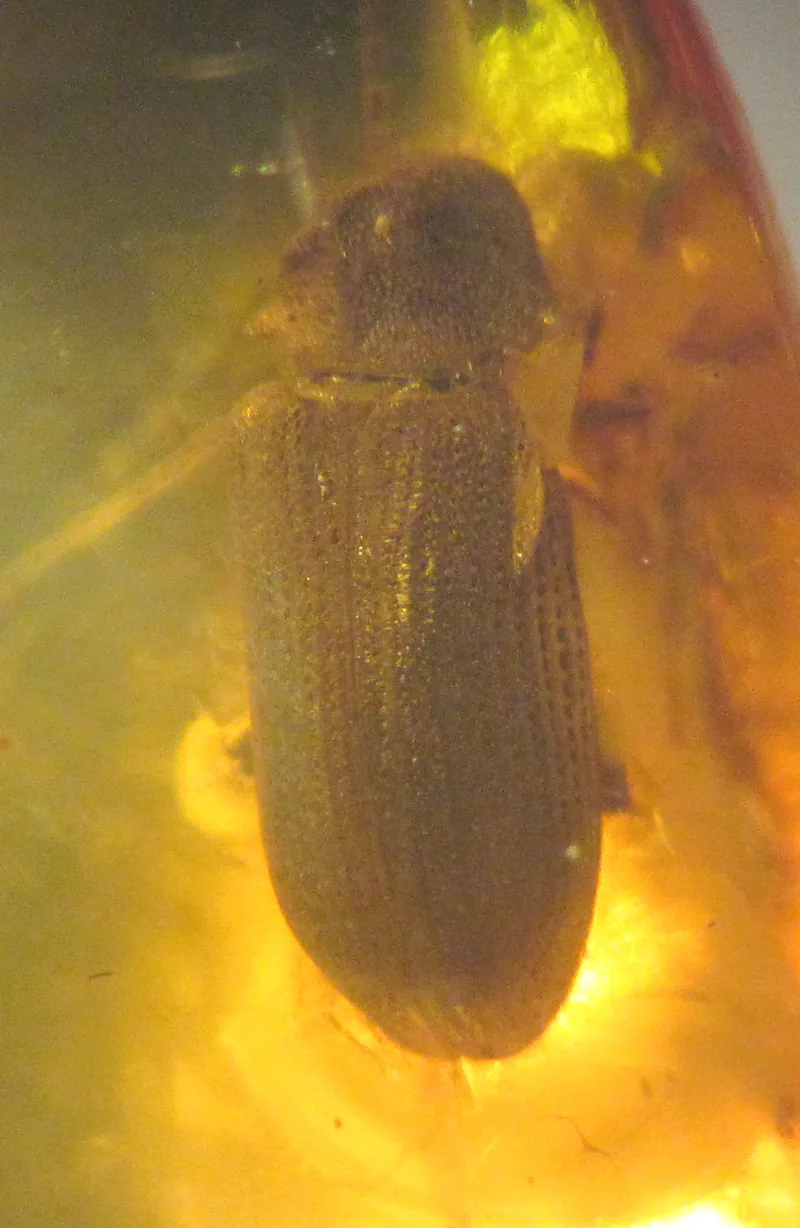
A good official surprise to leave with is how far the resin often travelled. “Most amber did not originate in the place where it was found.” After the trees fell, “the resin-coated logs were carried by rivers and tides to deltas in coastal regions, where they were buried over time.” Official pages call most known accumulations redepositions. The Getty essay ends its science section with a question that is still worth asking: “Whence came a substance that carried within it the flora and fauna of another place and time, one with traces of the earth and sea, one that seemed even to hold the light of the sun?”[source]
The quiz has ten questions from those official sentences. The timeline can be read in order. The fact sheets are typographic PDFs, A4 and US Letter, with no photographs inside: which amber, when resin becomes amber, and why fidelity is not a film story.
Enjoyed this amber desk?
No pop-ups. No intrusive advertising. Just interesting stuff. A little support helps the next fossils.im site get built.