Dominican amber
A diverse Miocene collection
The American Museum of Natural History “houses a very diverse collection of amber fossils from the Miocene of the Dominican Republic.” That official wording is about the museum’s holdings.[source]
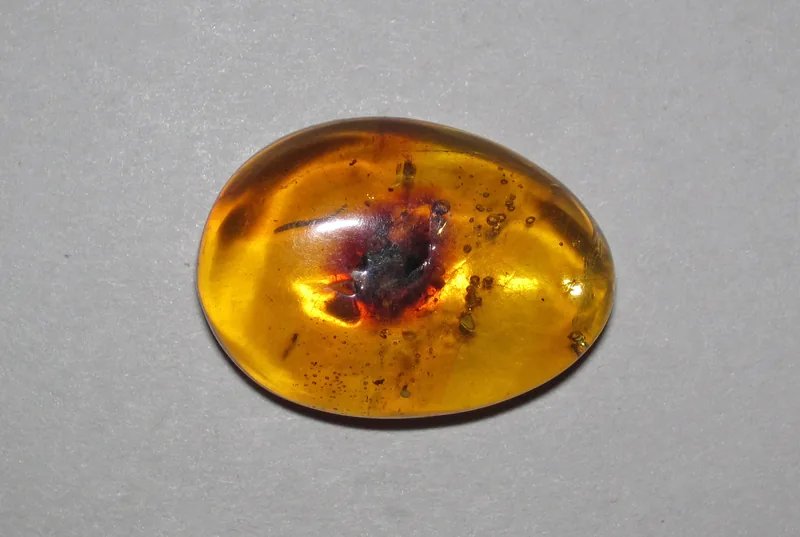
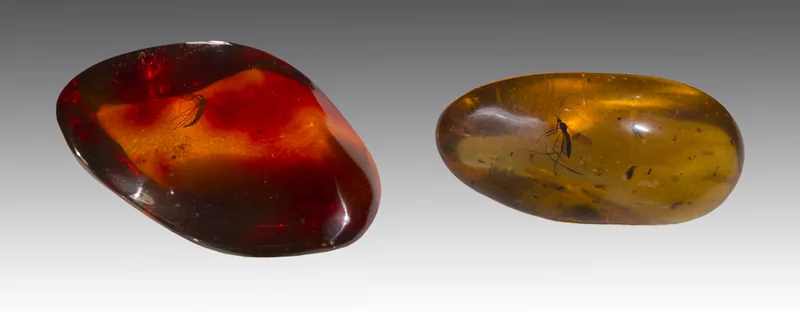
A mosquito in amber from the Northern Cordillera, Dominican Republic, is on this page in a still by Didier Descouens. The file names the locality. This site does not add a date the file does not give, and does not treat the AMNH collection’s Miocene wording as a label for this one photograph.[source]
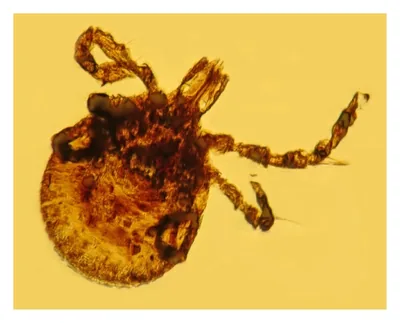
A larval hard tick, Amblyomma, in Dominican amber, was photographed by George Poinar Jr. The original still is only 600 pixels across, so this site uses a 400-pixel copy and does not upscale it.[source]
AMNH also mentions “smaller collections of amber from the Paleocene of Wyoming, Eocene of Arkansas, Miocene of Mexico, and other localities,” beside the Dominican holdings. Official wording on the Dominican material itself is strong: “The Dominican amber collection is very diverse, taxonomically and in terms of grades of amber, and is the finest collection of this material.” The breadth of the amber collection, the museum says, is due in large part to Robert G. Goelet, trustee and Chairman Emeritus, “who funded purchase of collections and sponsored field work.”[source]
The Getty essay illustrates a damselfly in Dominican amber, 4.6 centimetres long, from a private collection, in a photograph credited to D. Grimaldi and the American Museum of Natural History. That official example is mentioned here as the museum published it. It is not one of the photographs on this site.[source]
Enjoyed this amber desk?
No pop-ups. No intrusive advertising. Just interesting stuff. A little support helps the next fossils.im site get built.