Cretaceous holdings
Five official collections, and their ages
AMNH “holds pre-eminent collections of Cretaceous amber, a total of some 10,000 pieces,” from five published places. Those ages belong to the museum’s holdings. They are not a complete world list of Cretaceous amber.[source]
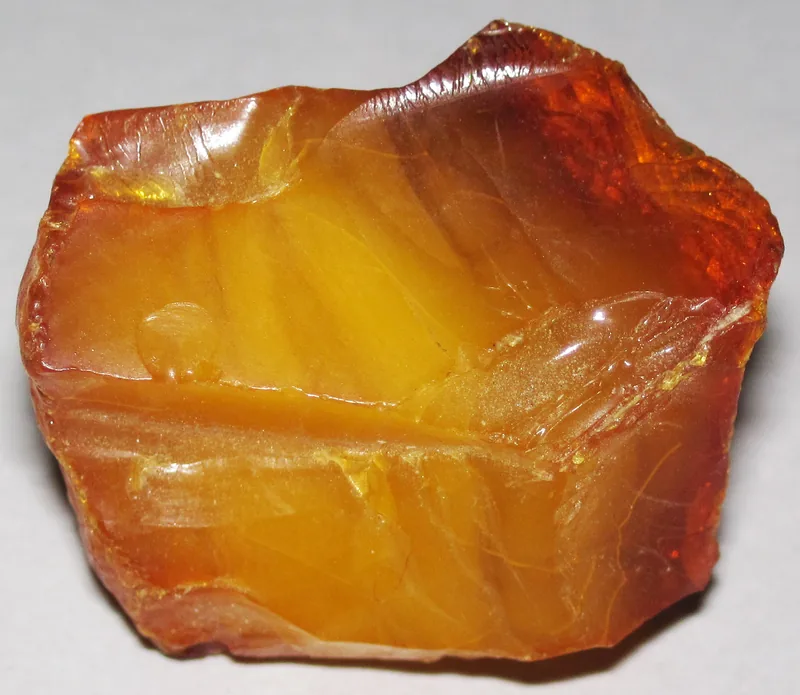
The official list is: “Lebanon (c. 125 Ma), Myanmar (c. 100 Ma), Alaska (95 Ma), New Jersey (c. 90 Ma), and Alabama (ca. 85 Ma).” The slightly different words — c., ca., or a bare figure — are kept as the museum wrote them, and are not averaged or tidied into one style.[source]
“Collectively, these specimens provide a unique archive of insect evolution during a time when angiosperms radiated.” Because amber “preserves with microscopic fidelity, it allows uniquely accurate estimates of the amount of evolutionary change over millions of years.” Arthropods “are the most diverse life forms in amber, though plants and rare soft-bodied invertebrates can also be preserved.”[source]
AMNH never had a researcher of fossil insects “prior to 1986,” but “the collections have grown enormously since David Grimaldi joined the staff.” The amber collection is “arguably the most important such research collection in the world, being strong for both the Tertiary and Cretaceous.” As of 2009 there were “almost 400 holotypes in the amber collection.”[source]
The same official page also describes a different kind of insect fossil, so that nobody has to confuse it with amber. The museum later received “a large collection of fossils from the Aptian-aged Crato (Santana) Formation of Brazil (mid-Cretaceous, ca. 110 Ma), containing some 3,000 terrestrial arthropods.” “The Crato insects are mineralized replicas preserved in limestone, and constitute one of the largest and most diverse deposits of Cretaceous insects.” They are not pieces of resin.[source]
AMNH’s amber page opens even earlier: “Insects evolved at least 420 million years ago, and their rise to become the most diverse and ecologically important class of terrestrial animals is a story beautifully recorded in the fossil record.” That official sentence is about insects. It is not a date for amber itself.[source]
This page is about those official holdings and ages. It does not use a Burmese or Lebanese still whose licence was not cleared for this build, and it does not invent a specimen locality to illustrate the list.[source]
Enjoyed this amber desk?
No pop-ups. No intrusive advertising. Just interesting stuff. A little support helps the next fossils.im site get built.