Baltic amber
The most famous deposit, and a tree we cannot name
Baltic amber is the deposit most people mean when they say “amber.” Official pages also call it succinite. What they will not do is name the tree with certainty.[source]
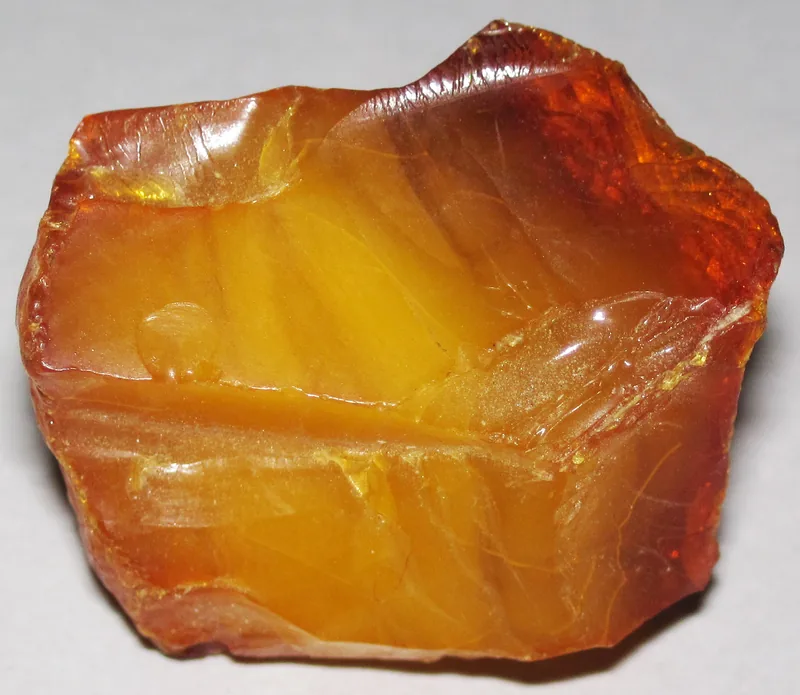
“Despite decades of study, there is no definite conclusion about the botanical source of the vast deposits of Baltic amber,” the Getty essay says, quoting Jean H. Langenheim. “It is clear that the amber is not derived from the modern species of Pinus, but there are mixed signals from suggestions of either an araucarian Agathis-like or a pinaceous Pseudolarix-like resin producing tree.… Although the evidence appears to lean more toward a pinaceous source, an extinct ancestral tree is probably the only solution.”[source]
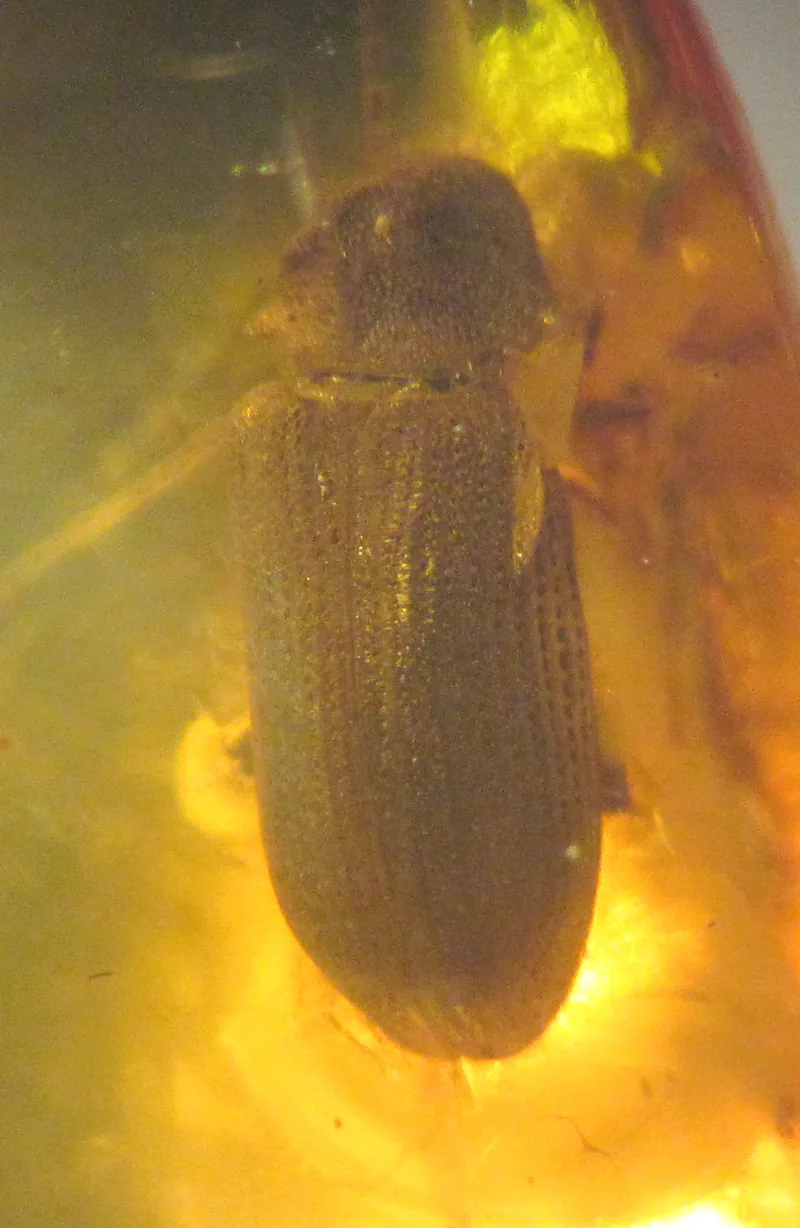
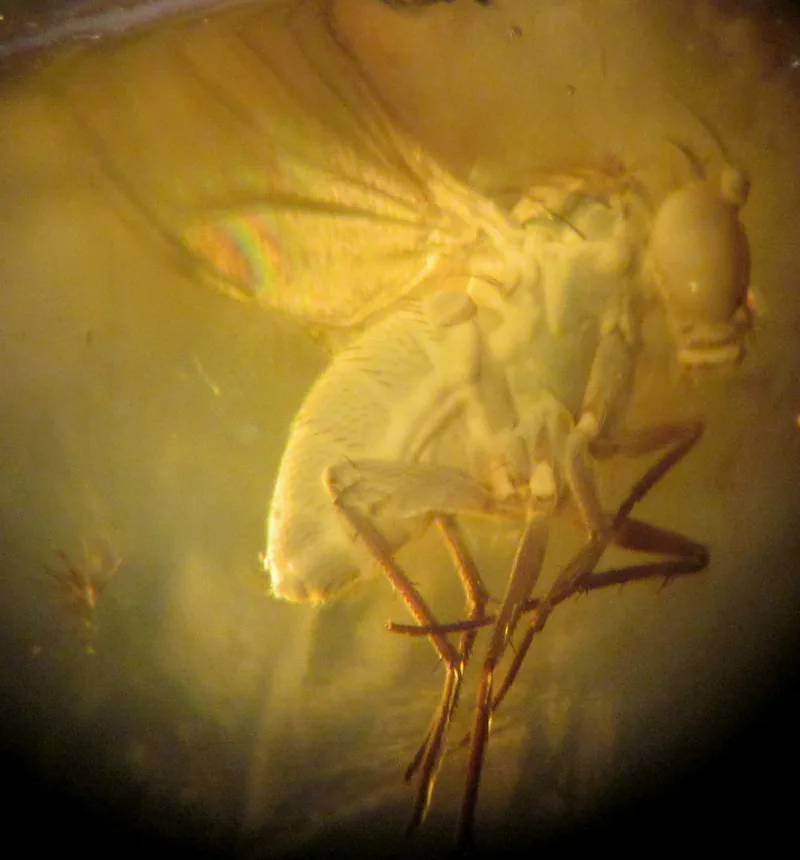
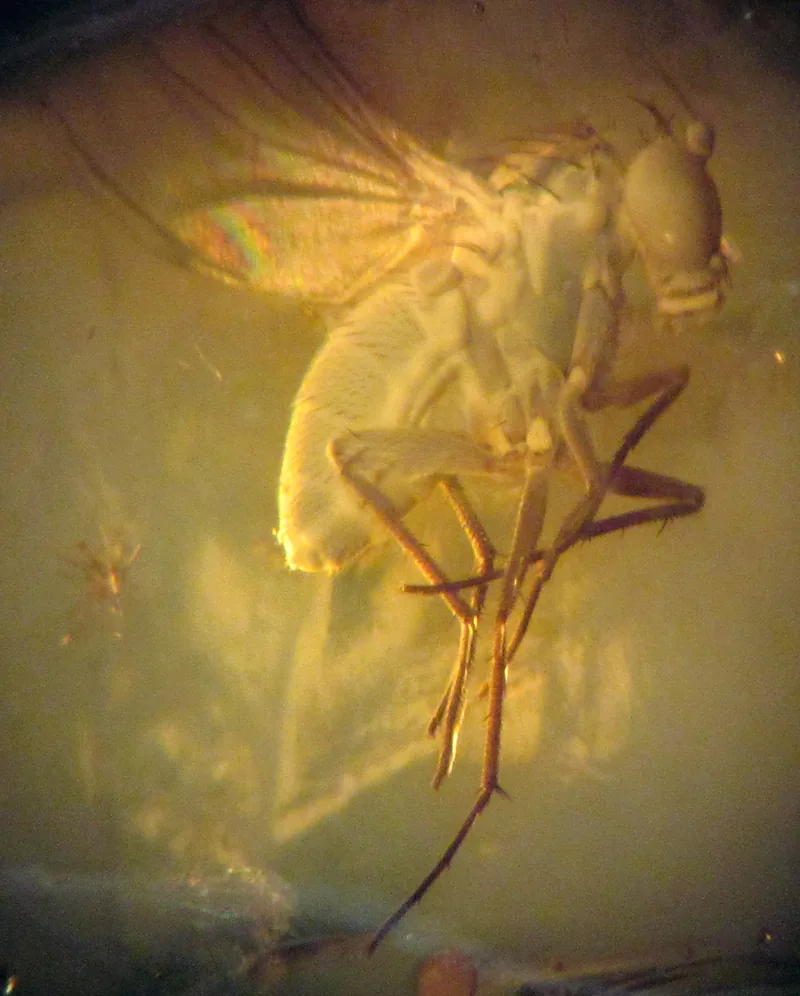
The beetle and two flies from Yantarnyi, on the Samland Peninsula beside the Baltic Sea, carry a specimen label: the Amber Formation, the “Blue Earth layer”, and the Lutetian Stage of the lower Middle Eocene. The beetle is about 3.5 millimetres long. One fly is shown in a field of view about 4 millimetres deep; the other is just under 5 millimetres from top to bottom. Those official-looking label dates stay with these specimens. They are not treated on this site as a date for every piece of Baltic amber.[source]
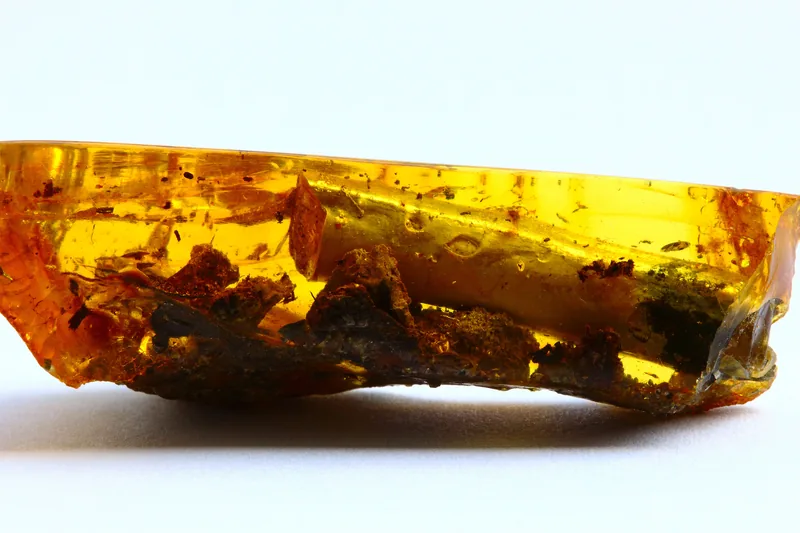
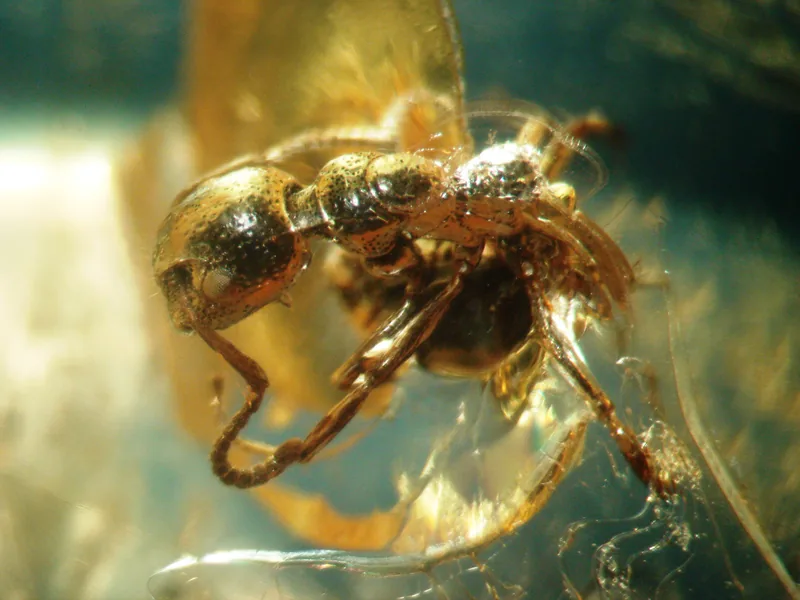
A 5.5-centimetre piece on this page shows plant inclusions in Baltic amber. Official pages note that amber can preserve plant matter as well as insects. A fossil ant, about 4 millimetres long, appears in another still; the file caption gives an age of 40–50 million years. That wording stays with the file, and is not blended with the Middle Eocene labels on the Yantarnyi specimens.[source]
AMNH’s Baltic holdings, the museum says, are “not as large as some European collections,” but “contain many rare taxa, particularly of Hymenoptera,” including the Jens-Wilhelm Janzen collection, “rich in parasitoid wasps that are rare in this amber (such as Chalcidoidea),” and “the world’s largest collection of fossil bees,” assembled by M. S. Engel, “which are very rare in Baltic amber.” Among the museum’s first significant amber-related acquisitions in the early twentieth century were “those in Eocene Baltic amber (with some of W. M. Wheeler’s ant types).”[source]
The Getty essay illustrates a cone in Baltic amber, 15.2 centimetres long, from a private collection, in a photograph credited to D. Grimaldi and the American Museum of Natural History. That official example is mentioned here as published. It is not one of the photographs on this site.[source]
Enjoyed this amber desk?
No pop-ups. No intrusive advertising. Just interesting stuff. A little support helps the next fossils.im site get built.